The most common reason a grapevine refuses to produce is that it’s fruiting on old wood, has too little light reaching the fruiting zone, or is being pushed to crop before it’s ready. Fix those three things and cluster counts climb — sometimes dramatically in a single season. Here’s how I’ve worked through low-yield problems in my Wisconsin (Zone 4) vineyard, backed by research from University of Minnesota Extension and Cornell’s viticulture program.
Why Grapevines Underperform: The Root Causes
Before reaching for the fertilizer bag, it helps to understand the biology. Grapevines fruit exclusively on current-season shoots growing from one-year-old canes (wood that grew the previous summer). Two-year-old or older wood produces only leaves and stems — no clusters. Every pruning decision you make should start from that fact.
UMN Extension’s cold-climate viticulture research consistently shows that balanced pruning — matching the amount of wood you leave to the vine’s vigor — is the single biggest factor in consistent fruiting. Both under-pruning and over-pruning hurt yield. Under-pruning leaves too many weak shoots fighting for resources; over-pruning stresses the vine and leaves it without enough fruiting wood.
1. Master Balanced Pruning (the #1 Fix)
The “balanced pruning” rule of thumb: leave roughly 20–40 buds per pound (0.45 kg) of one-year cane wood you remove. In practice, weigh the prunings before discarding them. A vine that drops 1 lb (0.45 kg) of canes should be left with about 20–30 buds. A vigorous vine dropping 2 lb (0.9 kg) can handle 40–60 buds.
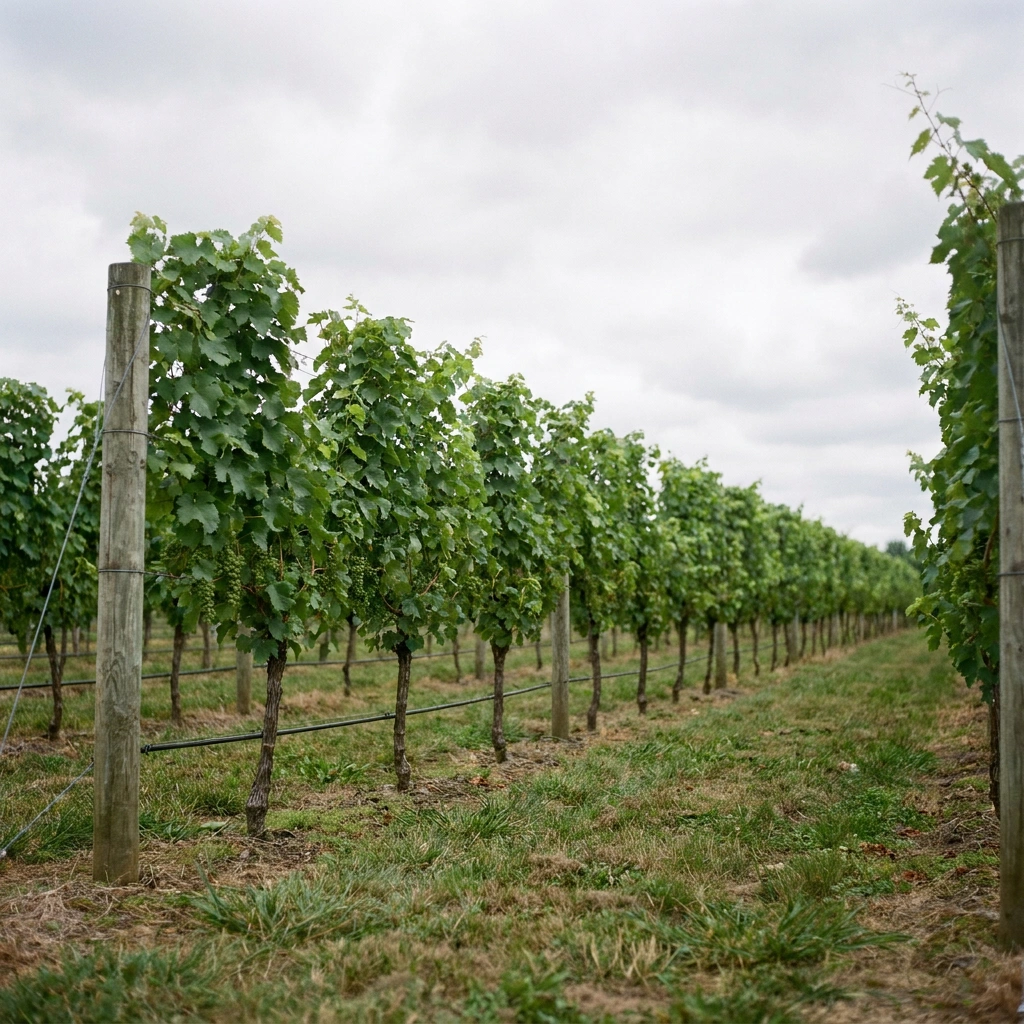
For most cold-hardy varieties — Marquette, Frontenac, La Crescent, Petite Pearl — a 4-cane Kniffen or VSP system works well. Retain two to four canes of pencil-to-thumb diameter with nodes spaced about 3–4 inches (7–10 cm) apart. Canes thinner than a pencil rarely fruit well; canes thicker than your thumb are too mature.
Do your dormant pruning in late winter, after the last hard freeze in your area — in Zone 4–5, that often means mid- to late March. Cutting too early exposes the vine to cold injury on the cut ends, and you also can’t yet see which canes suffered winter kill.
2. Get Light Into the Fruiting Zone
Grape clusters form at the base of shoots that grew in sunlight the prior year. A shoot shaded in July will produce a bud that fruit poorly the following season. Cornell research pegs optimal sunlight at at least 6 hours of direct sun per day on the fruiting wire, with the cluster zone ideally not shaded by the canopy above it.
Shoot positioning (VSP — Vertical Shoot Positioning) addresses this directly. As new shoots emerge in spring, tuck them upward between your catch wires so they grow vertically above the fruiting wire. This fans the canopy out and up, keeping the cluster zone open to sun and air. Shoot positioning takes maybe 20–30 minutes per 10 vines, twice a season, and it pays off in both fruit set and disease reduction.
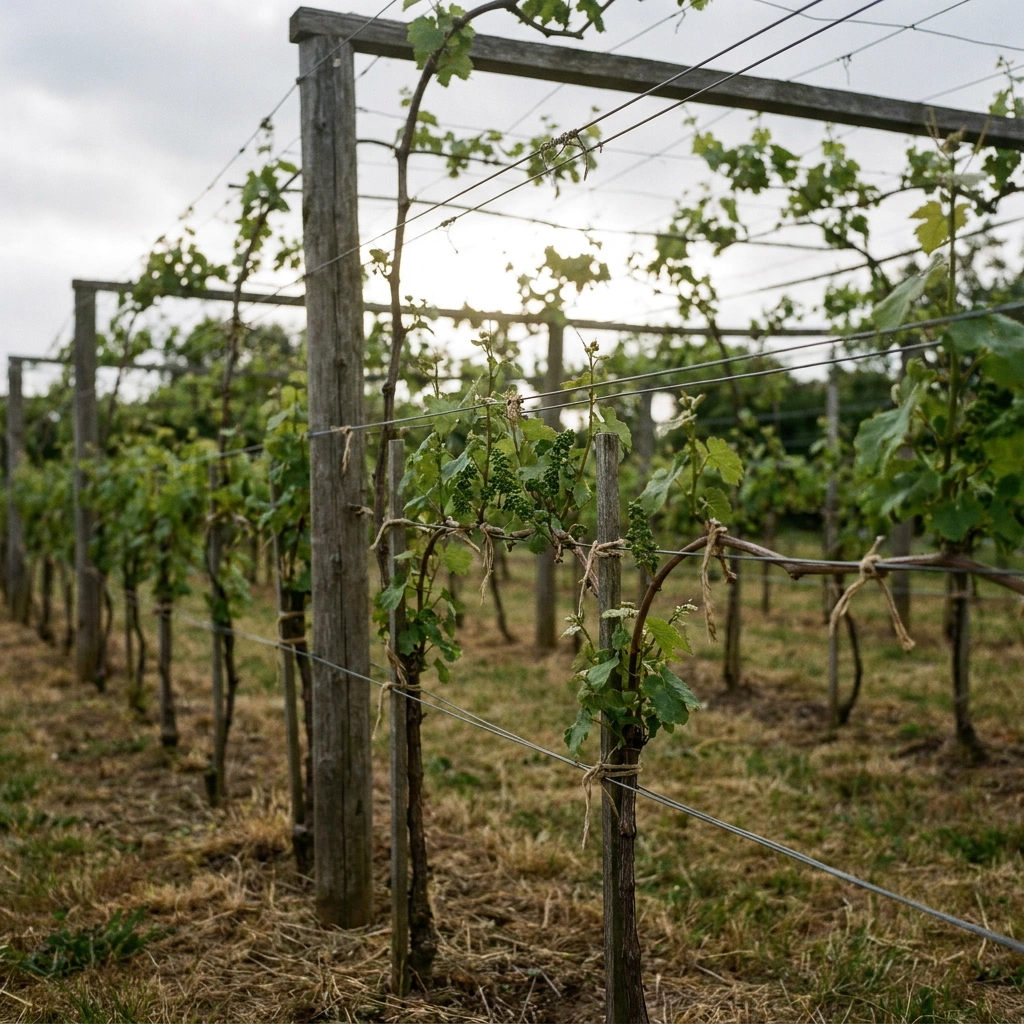
See my guide on setting up a proper grape trellis for the wire placement that makes VSP work. If your trellis only has one wire at 36–42 inches (90–105 cm), add two or three catch wires at 18-inch (45 cm) intervals above it — that’s the structure that lets you train shoots straight up and keeps them from flopping over and shading the clusters below.
3. Don’t Overcrop Young Vines
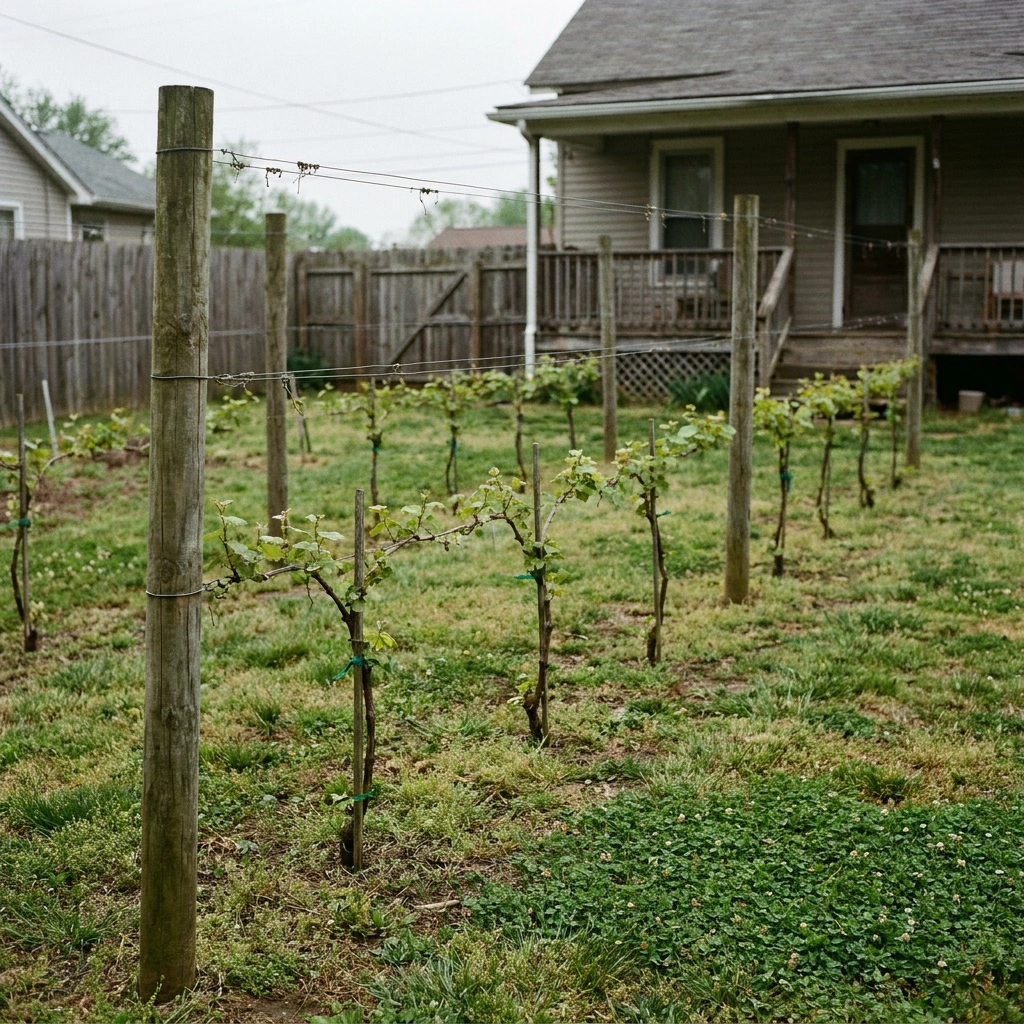
One of the most common mistakes I see with cold-climate varieties: the vine flowers in year two and the grower lets every cluster develop. The plant exhausts itself, the root system never reaches its full potential, and yields stay mediocre for years afterward.
The rule I follow (consistent with UMN Extension recommendations): remove all flower clusters in year 1 and year 2. In year 3 allow no more than 1–2 clusters per shoot. By year 4 a healthy vine can handle full cropping. Cold-hardy varieties like Marquette and Frontenac are vigorous and will reward this patience — they can comfortably carry 15–20 clusters per vine at full maturity.
4. Understand the Cold-Climate Bloom Problem
If your vine sets flowers but fruit doesn’t develop (or drops off as tiny shot berries), the culprit is often poor fruit set caused by cold or wet weather at bloom. This is a real and underappreciated issue in Zone 4–6 vineyards. Grape flowers open in late May to mid-June in most northern regions; a week of cool, rainy weather (below 60°F / 16°C) at that time can devastate fruit set because pollen doesn’t transfer well and the calyptras (flower caps) may not separate properly.
There’s limited you can do to control the weather, but a few things help: choose varieties with tight-cluster genetics that are less susceptible to shatter, ensure your canopy is open enough for any wind to assist pollination, and don’t apply broad-spectrum pesticides during bloom (they can kill the limited pollinators present and interfere with flower development).
This is one reason cold-hardy hybrids bred at UMN — Marquette, Frontenac Gris, Itasca — were selected partly for reliable fruit set in cold, short seasons. If you’re repeatedly losing clusters to poor set on a labrusca or vinifera variety, switching to a UMN hybrid may solve more problems than any cultural practice.
5. Soil, Nutrition, and the One Fertilizer Worth Using
Grapevines are not heavy feeders. Over-fertilizing with nitrogen is almost as common a mistake as under-pruning — it pushes vegetative growth at the expense of fruiting. Cornell’s extension guidelines recommend a soil test before adding anything, and in most established vineyards, less nitrogen is the answer, not more.
What grapevines do need for good cluster development: adequate potassium (for sugar loading in berries), boron (for fruit set — a trace element often deficient in sandy soils), and balanced phosphorus (for root development and flower initiation). A fertilizer blended specifically for fruiting plants and vines will hit these targets without spiking nitrogen.
6. Let the Vine Age
A blunt truth: young vines simply don’t produce like mature ones. In a cold climate, where you may lose a growing season every few years to winter injury, “young” can mean 5–6 years. Be patient. A Marquette or Frontenac vine properly trained and managed will produce 10–20 lbs (4.5–9 kg) of fruit per vine at maturity — but not in year 2 or 3, and not after a vine that gets winter-killed back to the trunk every third year.
When a vine is killed back hard by winter, it’s effectively starting over from a new shoot. Count the years from that reset, not from the original planting date. In Zone 4–5, this is another argument for hardy varieties: Marquette and Frontenac routinely survive -20°F (-29°C) cane temperatures, meaning the vine’s structure accumulates year over year instead of resetting.
7. Variety Choice Matters More Than Technique
I’ve seen gardeners spend years trying to coax vinifera Concord or Niagara into reliable production in Zone 4, while a neighbor’s Marquette 20 feet away produces every single year with half the effort. Matching variety to your hardiness zone isn’t optional in northern growing — it’s the foundation everything else builds on.
For reliably high cluster counts in cold climates, UMN’s releases are hard to beat: Marquette (dark, wine-quality), Frontenac and Frontenac Gris (productive, high acid), La Crescent (white, aromatic), and newer releases like Itasca (white wine, mild flavor) and Petite Pearl (dark, upright growth). Cornell has also released cold-tolerant varieties worth exploring for Zones 5–6.
Once you have the right variety, the correct pruning timing, a solid trellis structure, and a few seasons of patience — yields take care of themselves. Check harvest timing once clusters are full to make sure you’re not leaving fruit on too long: how to tell when grapes are ready to harvest.
Quick Checklist: Why Is My Vine Not Producing?
- Vine age: under 3 years? — let it establish, don’t expect full clusters yet
- Pruning: did you prune back to 1-year-old canes? — old wood doesn’t fruit
- Too many buds left: over 50–60 buds on a lightly vigorous vine leads to thin, weak shoots
- Light: does the fruiting wire receive 6+ hours of direct sun? — add/adjust trellis or cut nearby vegetation
- Bloom weather: cold/wet during flowering? — nothing to do now; variety swap may help long-term
- Winter damage: did canes survive intact? — if buds are brown inside, those canes lost viability
- Nitrogen excess: is shoot growth extremely vigorous (10+ ft / 3 m) but few clusters? — cut nitrogen, improve balance
FAQ: Getting More Grapes From Your Vine
Why does my grapevine have lots of leaves but no grapes?
The most likely cause is excessive nitrogen (either from over-fertilizing or a high-nitrogen soil), combined with over-pruning. The vine puts all its energy into shoot and leaf growth instead of flowering. Cut nitrogen fertilizer completely and try balanced pruning — leave only 20–30 buds on a moderately vigorous vine. A well-drained, lean soil actually encourages more fruiting than a rich, amended one.
How many grape clusters should a mature vine produce?
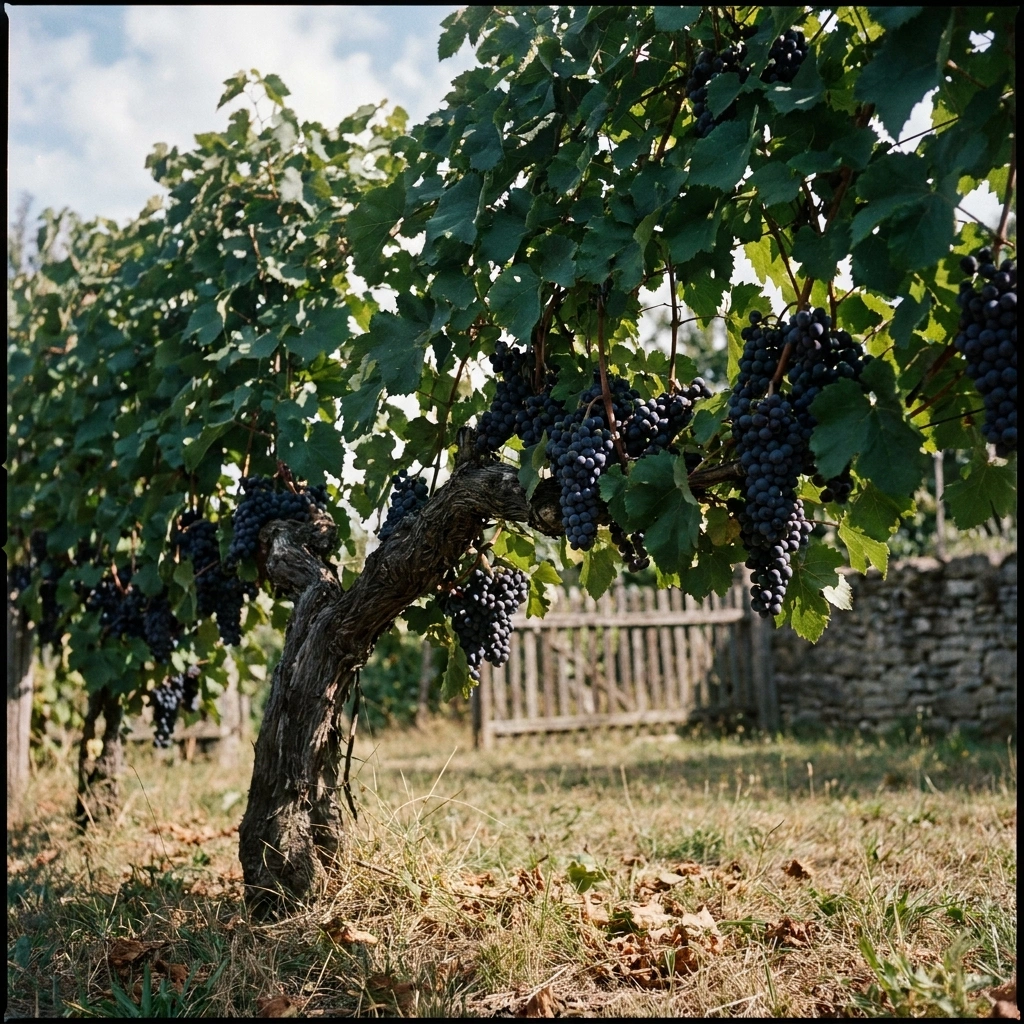
A well-managed mature cold-hardy vine (age 5+) typically carries 15–25 clusters per vine, translating to 10–20 lbs (4.5–9 kg) of fruit. Numbers vary widely by variety — Frontenac is naturally very productive, while Petite Pearl tends toward fewer, higher-quality clusters. UMN Extension’s target for a balanced vine is roughly 1 cluster per shoot, with 15–25 shoots per vine.
When should I prune grapes to get more clusters?
In cold climates (Zones 3–6), prune in late winter after the coldest temperatures have passed — typically mid-March to early April in Zone 4–5. This reduces cold damage to fresh-cut ends and lets you identify winter-killed wood before pruning. Always prune back to healthy, pencil-to-thumb diameter, 1-year-old canes. See the full guide on grape pruning timing and technique.
Do grapevines produce more fruit in full sun?
Yes, significantly. Grapes need a minimum of 6 hours of direct sun daily, and more is better. Sun during the growing season drives the bud differentiation that determines next year’s cluster count. Shaded buds produce fewer and smaller clusters the following year. This is why shoot positioning (VSP) on a well-designed trellis is so important — it maximizes sun exposure on the canes that will fruit next year.
Can a grapevine produce grapes in the first year?
Not usefully, no. Even if a first-year vine flowers, UMN Extension recommends removing all flower clusters in years 1 and 2 so the vine can build a strong root system and trunk. Allowing cropping too early stunts vine development and leads to chronically low yields. Expect your first real harvest in year 3–4, and a full, reliable harvest by year 5–6 in cold-climate conditions.
🍇 Don’t plant the wrong grape
Vines take years to fruit. Get the free cheat-sheet of varieties that actually survive and ripen in your zone.
By subscribing you agree to our Privacy Policy.