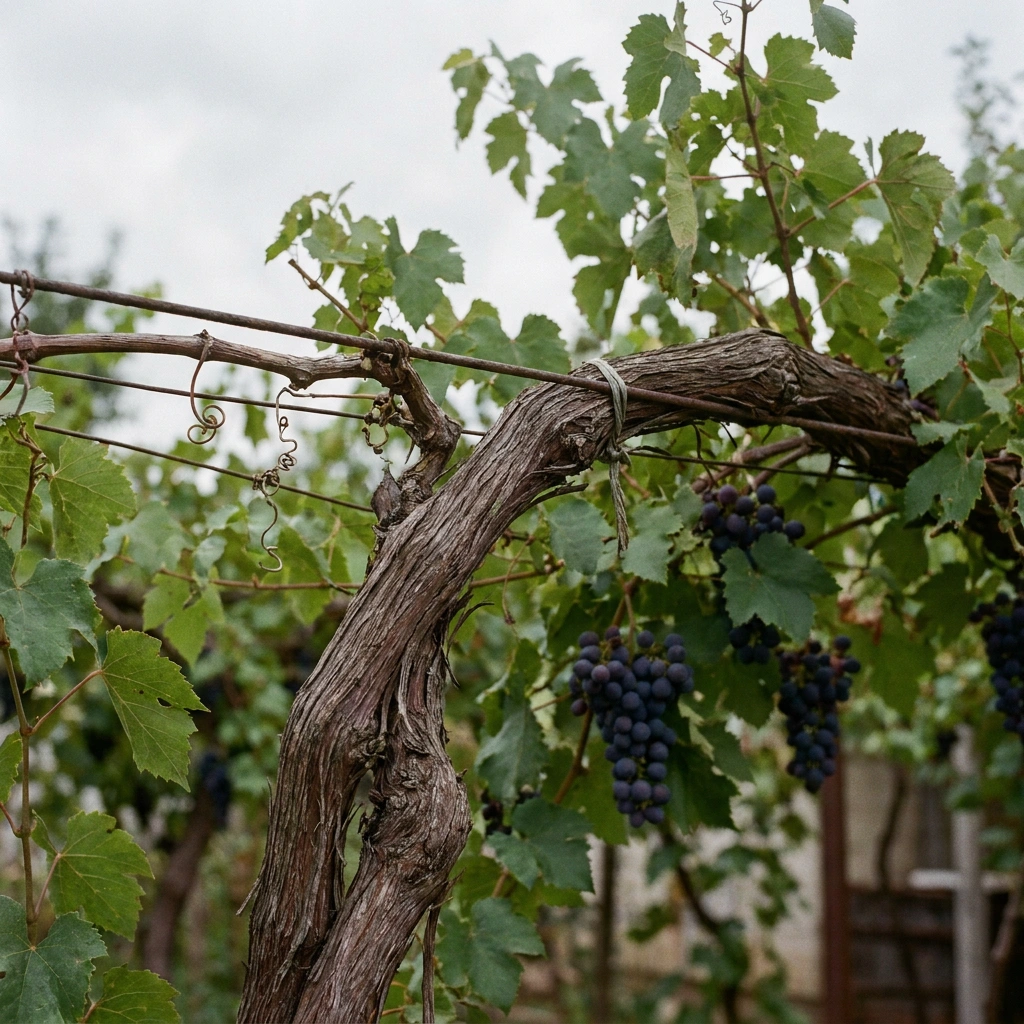
A grape clone is a vine propagated vegetatively – by cuttings or layering – from a single parent plant, so it carries the exact same genetics. If you want to reproduce a vine you love – whether that’s your neighbor’s Marquette that survived three brutal Zone 4 winters or the La Crescent in your own backyard that ripened a week ahead of everything else – cloning is how you do it. Seed-grown vines do not come true: cross-pollination creates genetically unique offspring, and you might wait four years to discover the flavor is nothing like the parent. A clone removes that gamble entirely.
What “Grape Clone” Actually Means
In commercial viticulture the word “clone” has a very specific meaning. When researchers at UC Davis or the University of Minnesota select a single outstanding vine – say, a Pinot Noir plant that produces consistent, well-structured fruit – they propagate it vegetatively over many generations. That lineage gets a clone number: Pinot Noir Clone 115, Clone 667, Dijon 777. Commercial nurseries sell these numbered clones because they have documented flavor and ripening profiles.
For a home grower, you rarely deal with numbered clones from a nursery catalog. But the biology is identical: every cutting or layered shoot you take from a vine is a clone of that vine. You’re copying its entire genetic blueprint – winter hardiness, brix at harvest, cluster architecture, disease tendencies, the works.
Why Clones Beat Seeds for Home Growers
Grapes are highly heterozygous. Two parent vines of the same variety will produce seedlings with wildly different characteristics – different ripening windows, sugar levels, and cold tolerance. In Zone 4b Wisconsin I’ve seen seed-grown “Concord” seedlings that were borderline tender compared to true Concord cuttings from the same bunch. Cornell’s viticulture extension makes the same point: for any named variety, vegetative propagation is the only reliable way to maintain variety identity.
For cold-climate growers this matters even more. If you find a Frontenac or Marquette vine that has proven its winter hardiness at your site over several seasons, that vine is valuable. Cloning it lets you expand your planting without rolling the genetic dice.
Method 1: Hardwood Cuttings (the Standard Approach)
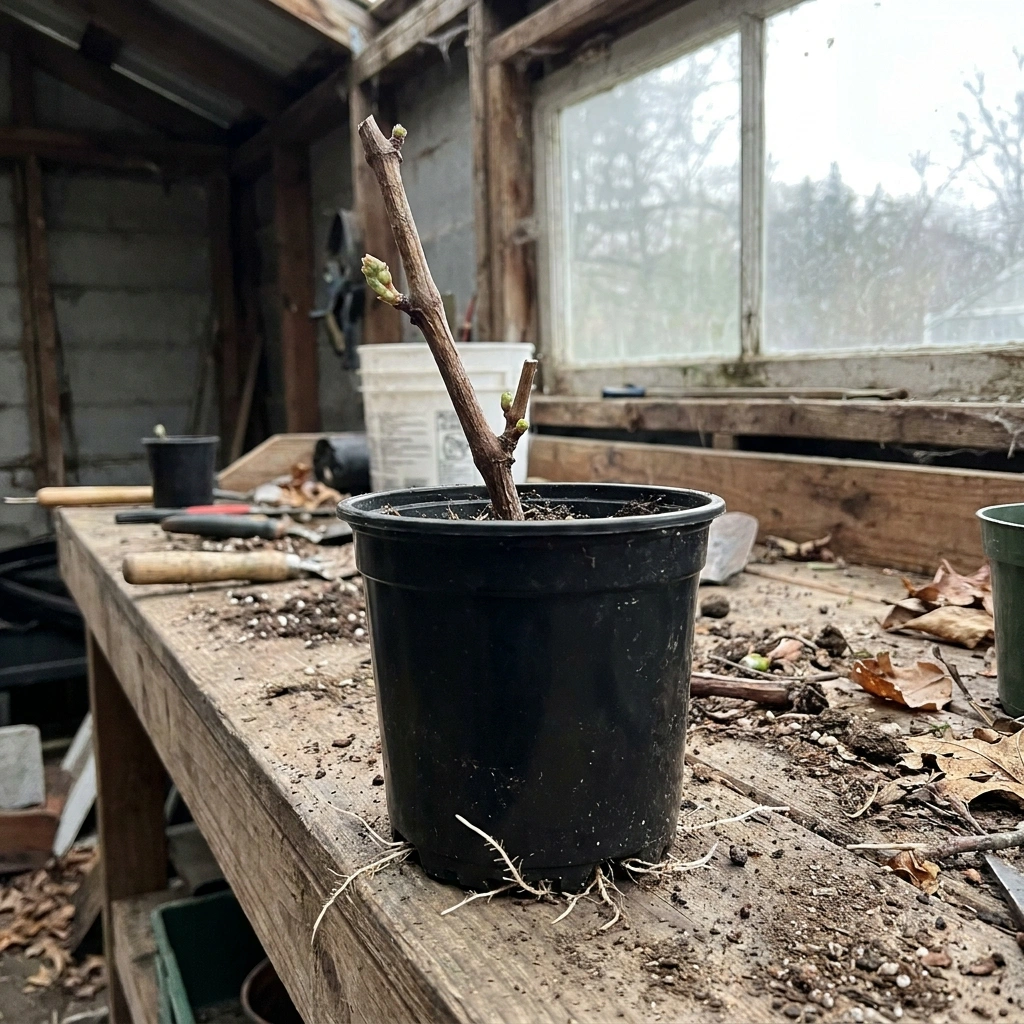
Hardwood cuttings taken during dormancy are the most common home-propagation method. The University of Minnesota Extension recommends this window: after vines have had at least 4-6 weeks of temperatures below 40°F (4°C) but before buds swell in spring – typically February or early March in Zones 3-5.
What to Cut
- Select pencil-thick canes from last season’s growth (brown, fully mature wood – not the greenish current-year shoots from midsummer).
- Cut sections 12-18 inches long (30-45 cm), each with 3-4 nodes.
- Make a straight cut just above a bud at the top and an angled cut just below a bud at the bottom (the angled cut helps you remember which end is down and sheds water).
- Take cuttings from wood near the base of the cane, not the thin wispy tips.
Storage if You’re Not Planting Right Away
Bundle cuttings in groups of 10, wrap in slightly damp burlap or newspaper, seal in a plastic bag, and store at 34-38°F (1-3°C) – the back of a refrigerator works. They’ll keep 6-8 weeks without issue. This lets you take cuttings during a January pruning session and pot them up closer to your last frost date.
Rooting
Dip the bottom inch of each cutting in rooting hormone powder or gel (indole-3-butyric acid at 3,000 ppm is the standard concentration for woody cuttings). Then set cuttings 4-6 inches deep in a coarse, well-draining medium – equal parts perlite and a soilless seedling mix works well. Keep one bud above the surface.
Bottom heat of 65-70°F (18-21°C) encourages rooting before top growth begins, which is what you want. A heat mat under the pot is a worthwhile investment if you’re doing this indoors. Keep the medium moist but not waterlogged – grape cuttings rot easily in soggy conditions.
Roots typically appear in 4-8 weeks. Once you see vigorous top growth and roots escaping the drainage holes, transplant to a larger container or direct to the ground after your last frost. See the companion guide on grape vine cuttings for detailed timing by region.
What I Use: Rooting Hormone
For woody cuttings like grapevines I’ve had the best results with a gel-form IBA rooting hormone – it coats the cut end evenly without dusting off. A rooting hormone gel for cuttings is inexpensive and one jar handles dozens of vines. Look for one rated for hardwood/woody plants, not just softwood herbs.
Method 2: Layering (the Foolproof Home-Grower Method)
Layering is my personal favorite for propagating a single vine in place, because the new plant stays connected to the parent and draws on its resources while it roots. Success rate is very high – I’ve never had a layer fail to root in 15 years of doing this.
Step-by-Step: Simple Ground Layering
- Choose a long, flexible shoot from the current or previous season’s growth – one that can reach the ground with 12-18 inches (30-45 cm) to spare beyond the burial spot.
- Wound the section you’ll bury: about 12 inches (30 cm) from the shoot tip, scrape a 2-inch (5 cm) section of bark on the underside down to the green cambium layer, or twist the shoot gently to crack the bark without breaking it. Wounding stimulates root formation.
- Apply rooting hormone to the wounded section (optional but speeds things up).
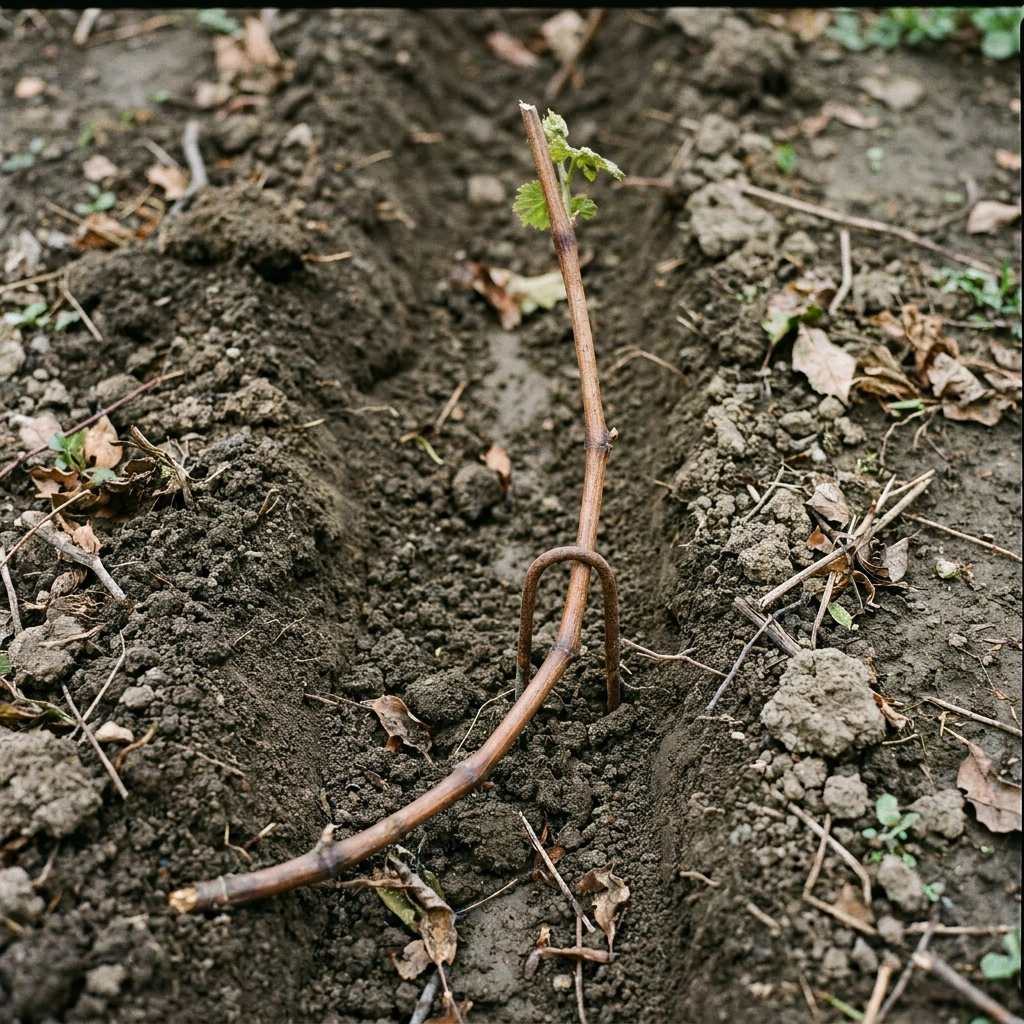
- Dig a shallow trench about 4 inches (10 cm) deep at the burial point. Add a handful of perlite or coarse compost to improve drainage.
- Bend the shoot down so the wounded section sits in the trench. Pin it in place with a U-shaped wire staple or a stone.
- Cover the buried section with soil, leaving the shoot tip pointing upward above the surface. The tip will grow as a new plant.
- Water well and keep the area moist through the growing season. Do not let it dry out for extended periods.
- Check for rooting in late summer or early fall – gently tug the tip. If it resists, roots have formed. You can sever the connecting cane at this point, but many growers leave it until spring before severing and transplanting, to let the new plant harden off fully attached.
Layering works best done in late spring when the vine is actively growing. One vine can produce 2-3 layers in a single season if you have enough long shoots. Cornell Cooperative Extension recommends this method specifically for home growers who want high rooting success without specialized equipment.
Clonal Selection: Choosing the Right Vine to Clone
Not every vine on your property is worth cloning. Before you take cuttings, observe the candidate vine over at least two full seasons and ask:
- Winter survival: did it come through the last harsh winter with minimal dieback, while other vines of the same variety struggled?
- Disease pressure: how did it handle downy mildew or black rot relative to adjacent vines?
- Ripening window: did it hit target Brix (22-24 degrees for most cold-climate reds) consistently before your first fall frost?
- Fruit quality: flavor, cluster size, berry firmness for your intended use (fresh eating vs. winemaking).
This kind of observation-based selection is exactly what commercial wineries do at a larger scale. The difference between a “standard” Marquette vine and the best-performing individual in a block can be meaningful. Over multiple vegetative generations you’re effectively doing informal clonal selection. UMN’s cold-hardy grape breeding program does the same thing systematically – they propagate and evaluate thousands of seedlings, then select the best performers for named releases.
Grafting vs. Own-Rooted Vines
Commercial European vineyards graft desirable varieties onto phylloxera-resistant rootstocks – a necessity since the late 1800s when phylloxera devastated European viticulture. For cold-climate growers in North America, most hybrid varieties (Marquette, Frontenac, La Crescent, Itasca) are grown on their own roots, not grafted. Phylloxera is generally less problematic in northern soils, and these hybrids have sufficient rootstock vigor on their own.
If you’re propagating cold-hardy hybrids at home, simple rooted cuttings or layered plants are the standard approach. Grafting is a skill worth learning eventually, but for most home growers it’s not necessary. See the guide to grape pruning to understand the vine structure you’ll be working with when taking cuttings during the dormant season.
Caring for Young Cloned Vines
Rooted cuttings or newly separated layers are essentially babies – handle them accordingly:
- First season: focus on root development, not fruit. Pinch off any flower clusters that appear in year one.
- Trellis early: get a stake in place immediately after transplanting so you can train the main shoot upright from day one.
- Water consistently: new transplants have a small root zone. Weekly watering (1 inch / 2.5 cm) during dry spells in the first season is critical.
- Winter protection in Zone 4-5: young vines in their first winter benefit from a light mulch over the root zone and – in Zone 4 – hilling soil over the crown of the vine before freeze-up.
Once established (second or third leaf), cloned vines are as hardy as their parent. Growing Pinot Noir from a cold-climate selection? Read the guide to growing Pinot Noir grapes for variety-specific management notes.
Frequently Asked Questions
What is a grape clone in simple terms?
A grape clone is a vine grown from a cutting or a layered shoot of another vine, so it has exactly the same genetics as the parent. Unlike a seedling, a clone will produce fruit identical in character to the vine it came from.
Can I clone a grape vine at home without special equipment?
Yes. Layering requires nothing more than a shovel, a wire staple to pin the shoot down, and basic rooting hormone (optional but helpful). Hardwood cuttings need a heat mat to improve success rates but can be rooted in a pot on a warm windowsill. Neither method requires a greenhouse or professional equipment.
What’s the best time to take hardwood grape cuttings?
Late winter dormancy – after 4-6 weeks of cold weather has fully matured the canes, but before bud swell in spring. In Zones 4-5 this is typically late January through early March. Avoid taking cuttings during a hard cold snap; wait for a milder day.
Will cuttings from a disease-resistant vine produce a disease-resistant plant?
Yes – vegetative propagation preserves all genetic traits, including disease resistance. If the parent vine has expressed good resistance to powdery mildew or black rot over multiple seasons at your site, its clones should carry the same genetic predisposition. Note that disease pressure still depends on environment and spray program – genetics is one factor, not a guarantee.
Is layering better than cuttings for a beginner?
For a single vine in a fixed location, layering is more forgiving because the new plant draws water and nutrients from the parent throughout rooting. Cuttings are better when you need multiple plants or the parent vine isn’t accessible to the planting site. Most experienced home growers use both methods depending on the situation.
🍇 Don’t plant the wrong grape
Vines take years to fruit. Get the free cheat-sheet of varieties that actually survive and ripen in your zone.
By subscribing you agree to our Privacy Policy.